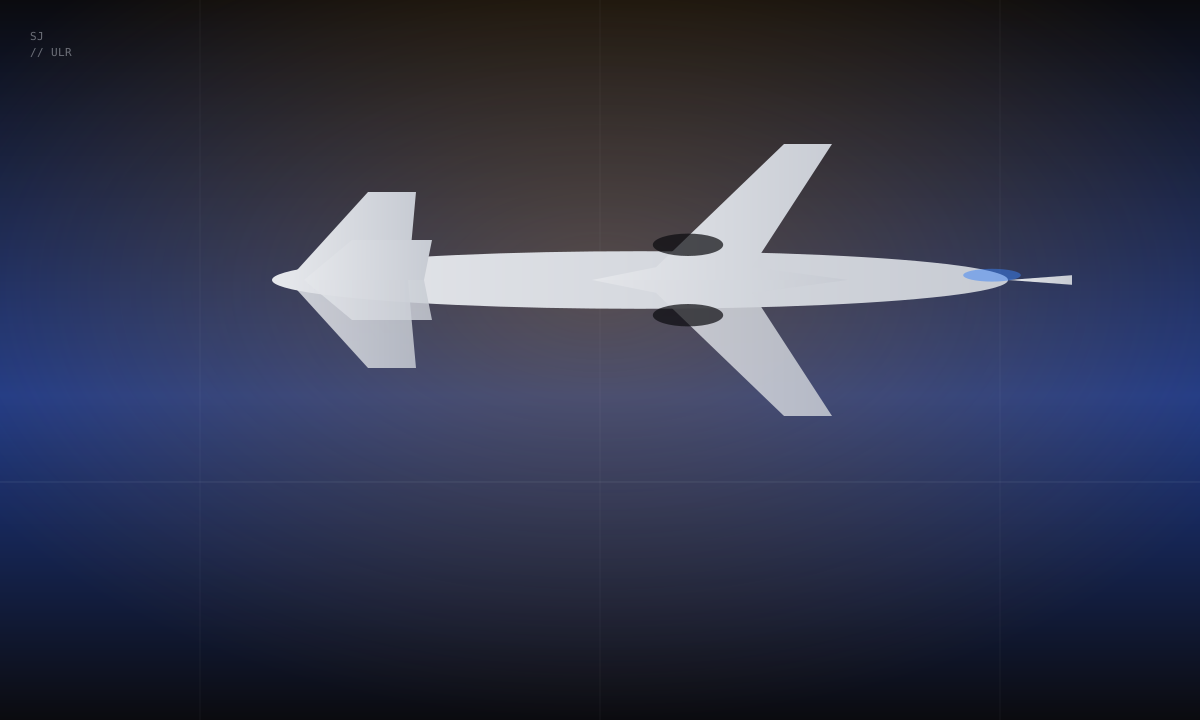
Ultra Long Range charter from Tokyo to Los Angeles. Live pricing, certified operators, 24/7 dispatch.
Chartering a private jet between Tokyo and Los Angeles is one of the more predictable sectors in global private aviation. The combination of slot-friendly primary FBOs at each end, regular 24/7 customs at both airports, and a deep resident fleet means positioning costs stay controlled and crew rest constraints rarely bind.
Most principals select an aircraft category matched to the great-circle distance and passenger count, though Tokyo departures during peak European holiday windows often require earlier commitment. Sable Jets's desk sources from 400+ ARGUS Platinum and EASA-certified operators, cross-checks availability against live empty-leg inventory, and returns firm quotes inside an hour.
A Ultra Long Range balances cabin, range, and hourly rate for the typical Tokyo-Los Angeles mission profile, with direct-flight capability and strong payload margin.
Typical block time is between 1 and 12 hours depending on aircraft category. A super-midsize jet is the common sweet spot for this sector on a one-way sector.
With no unusual slot constraints, the desk can confirm options inside an hour and most flights are bookable with 12-24 hours notice. Peak periods benefit from 3-5 days lead.
Both ends handle the full general-aviation customs workflow; your dispatcher files the gendec and coordinates crew and pax clearance based on your itinerary.
Yes. Published empty-leg prices are typically 40-75% below the full-charter rate, though they require date flexibility and are inventory-dependent.
The Sable Jets desk is online 24/7. Firm options in under an hour from the enquiry above or our concierge line.
Request a live quote → Call flight desk